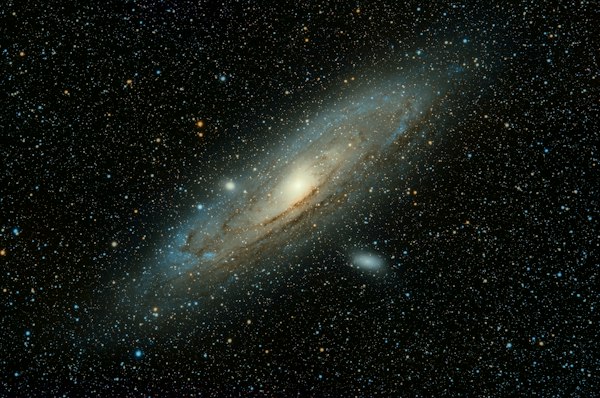
For thousands of years, humans have gazed at the night sky with wonder. The stars guided our ancestors across oceans, marked the seasons, and inspired myths that still resonate today.

This exhibition traces the evolution of astronomical knowledge from prehistoric times to the present day.

A Timeline of Discovery

~3000 BCE

Babylonian Astronomy

Ancient Mesopotamians create the first systematic records of celestial observations, developing the zodiac and predicting eclipses with remarkable accuracy.

~280 BCE

Aristarchus Proposes Heliocentrism

Greek astronomer Aristarchus suggests that Earth orbits the Sun—an idea 1,800 years ahead of its time that wouldn't be accepted until Copernicus.

~150 CE

Ptolemy's Almagest

Claudius Ptolemy compiles ancient astronomical knowledge into a comprehensive treatise that will dominate Western astronomy for 1,400 years.

1543

Copernican Revolution

Nicolaus Copernicus publishes "De Revolutionibus," placing the Sun at the center of the universe and igniting a scientific revolution.

1609

Galileo's Telescope

Galileo Galilei turns his improved telescope to the heavens, discovering Jupiter's moons, lunar craters, and phases of Venus.

1687

Newton's Principia

Isaac Newton publishes his laws of motion and universal gravitation, providing the mathematical framework for celestial mechanics.

1915

General Relativity

Albert Einstein presents his theory of general relativity, revolutionizing our understanding of gravity, space, and time itself.

1929

Hubble's Discovery

Edwin Hubble proves that galaxies are receding from us, revealing that the universe is expanding and leading to the Big Bang theory.

1990

Hubble Space Telescope

The Hubble Space Telescope launches, providing unprecedented views of distant galaxies and revolutionizing observational astronomy.

2022

James Webb Space Telescope

JWST begins operations, peering deeper into space and time than ever before, observing galaxies that formed just after the Big Bang.

Giants of Astronomy

Stars and galaxies through a telescope

Galileo Galilei

1564 – 1642

Father of observational astronomy, physics, and modern science. First to use a telescope for astronomical observations.
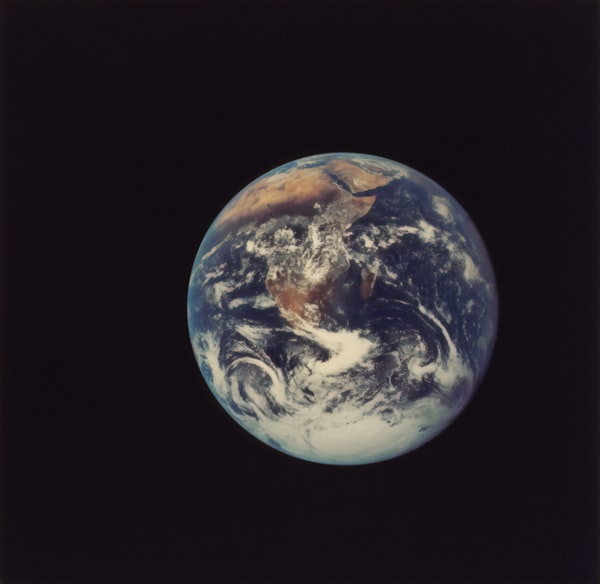
Light refracting through glass prism into spectrum

Isaac Newton

1643 – 1727

Developed laws of motion and universal gravitation, invented calculus, and built the first practical reflecting telescope.

Warped spacetime around a black hole

Albert Einstein

1879 – 1955

Revolutionized physics with special and general relativity, fundamentally changing our understanding of space, time, and gravity.
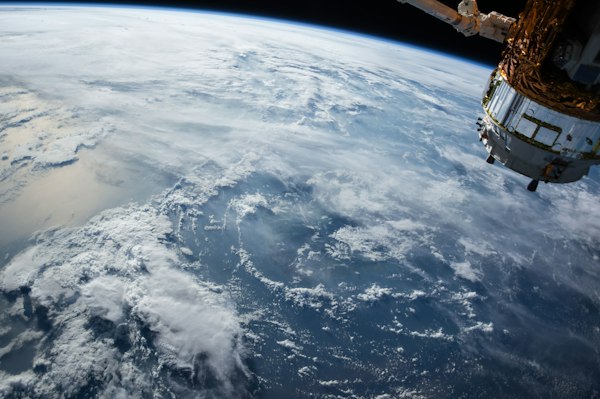
Earth seen from space — the pale blue dot

Carl Sagan

1934 – 1996

Brought astronomy to millions through "Cosmos," championed the search for extraterrestrial life, and inspired generations of scientists.

Exoplanets & Stars

Discover worlds beyond our solar system.

Continue Journey